
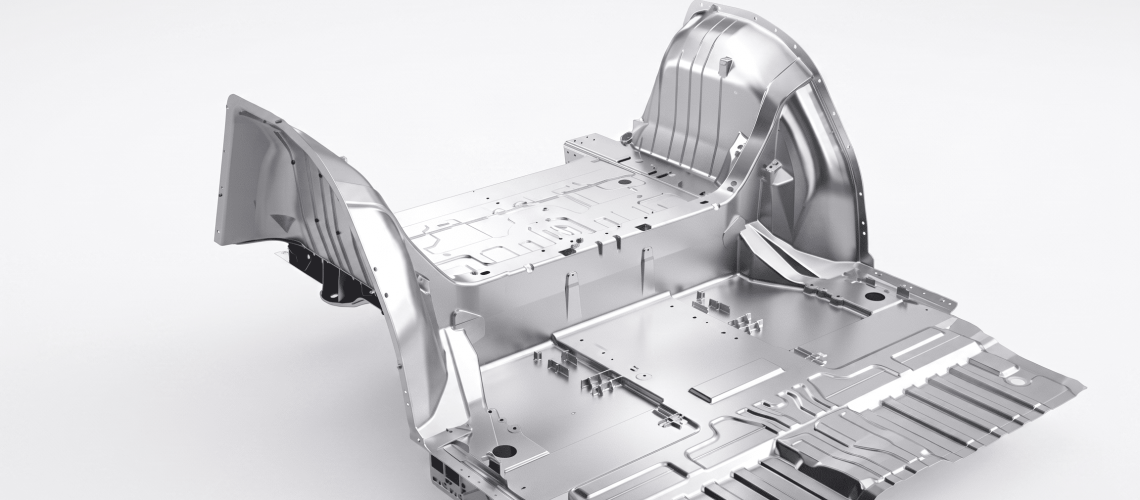
The global automotive casting market is valued at USD 87.99 billion in 2026, projected to reach USD 150.06 billion by 2034 at a CAGR of 6.90%. Electric vehicle adoption is the primary growth driver — and with it comes an unprecedented demand for high-integrity aluminum castings. But not all foundries deliver the same quality. For OEM buyers and procurement engineers, understanding aluminum die casting defects and how to verify foundry capability is critical.
Why Aluminum Die Casting Quality Matters More Than Ever in 2026
The aluminum casting market is expected to grow from USD 107.40 billion in 2026 to USD 169.49 billion by 2032, driven largely by EV lightweighting requirements. A typical EV battery pack housing, motor bracket, or structural component must meet stringent requirements:
- Porosity-free zones in critical sealing and mounting areas
- Tight dimensional tolerances (±0.05mm or better) for CNC-machined mating surfaces
- Consistent mechanical properties across production batches
- Full traceability from raw material to finished component
When these requirements are not met, the consequences include coolant leaks in battery housings, premature fatigue failures in suspension components, and costly field recalls. The root cause often traces back to uncontrolled casting defects.
The Top 5 Aluminum Die Casting Defects OEM Buyers Must Know
1. Gas Porosity
Gas porosity forms when trapped air or hydrogen gas cannot escape during the high-pressure injection process. It appears as small, rounded voids distributed throughout the casting wall.
- Causes: Insufficient venting, high injection speed, contaminated lubricant, or high moisture content in the melt
- Impact: Reduces tensile strength and creates leak paths in pressure-containing components
- Prevention: Vacuum-assisted die casting systems, optimized gate design, controlled melting atmosphere
2. Shrinkage Porosity
Unlike gas porosity, shrinkage defects result from uneven solidification. They typically appear as irregular, interconnected voids near thick sections or hot spots in the casting.
- Causes: Inadequate cooling channel design in the die, improper alloy temperature, or insufficient feeding pressure
- Impact: Creates internal weakness that leads to cracking during CNC machining or in-service fatigue
- Prevention: Mold flow analysis during tooling design, optimized cooling circuits, squeeze pin technology
3. Cold Shuts
Cold shuts occur when two streams of molten aluminum meet but fail to fuse completely, creating a visible line or seam on the casting surface.
- Causes: Low melt temperature, slow injection speed, or poor gate placement
- Impact: Structural weakness along the seam; can propagate into full cracks under load
- Prevention: Process parameter optimization, thermal simulation before tooling, proper shot sleeve maintenance
4. Inclusions (Oxide Film)
Oxide film and non-metallic inclusions enter the casting from the melt or the die surface. They are especially problematic in high-stress applications like automotive suspension components.
- Causes: Improper melt treatment, turbulent filling, or inadequate filtration
- Impact: Acts as crack initiation sites; reduces fatigue life dramatically
- Prevention: Melt degassing, ceramic foam filters, controlled pouring practices
5. Hot Tears
Hot tears are cracks that form during solidification when the casting is restrained from shrinking freely. They typically appear at internal corners or section transitions.
- Causes: Restrictive die geometry, high alloy solidification range, or premature die opening
- Impact: Catastrophic structural defect — parts must be scrapped
- Prevention: Proper fillet radii in tooling design, controlled ejection timing, alloy selection
How OEM Buyers Should Evaluate Foundry Quality Capability
Certification is the entry ticket — not the decision factor. ISO 9001:2015 demonstrates a quality management framework, but the real question is: what equipment, processes, and expertise does the foundry actually operate?
Here is a practical evaluation checklist:- ✅ Holds current ISO 9001:2015 certification
- ✅ Operates in-house mold design and CNC machining capabilities for single-source accountability
- ✅ Uses optical emission spectrometry (OES) for every heat of aluminum alloy
- ✅ Performs X-ray NDT inspection on critical castings (minimum 8kW system recommended)
- ✅ Maintains temperature-controlled metrology lab (20°C ± 1°C) for dimensional inspection
- ✅ Operates CMM and vision measuring systems with traceable calibration records
- ✅ Conducts material tensile testing with certified 100kN+ load frames
- ✅ Provides complete inspection documentation: FAI and CMM dimensional reports, OES material certificates and X-ray records
- ✅ Offers surface treatment options (powder coating, anodizing, shot blasting) in-house
- ✅ Demonstrates capacity for volume production (150,000+ castings per month) with consistent quality
The Gigacasting Factor: What It Means for Your Supply Chain
While gigacasting dominates headlines, the reality is that most EV programs still require a mix of large structural castings and smaller precision components. Battery housings, motor mounts, thermal management brackets, and sensor housings all demand the same defect-free quality — just at different scales.
The trend toward integrated die-casting body structures does not eliminate the need for reliable mid-volume foundries. In fact, it increases it: as OEMs consolidate more components into single large castings, the remaining sub-components become even more critical to overall vehicle performance.
How Renyi Castings Addresses These Challenges
Founded in 2005 and based in Ningbo, China, Renyi Castings has built 20 years of expertise across six core manufacturing processes: aluminum die casting, gravity casting, sand casting, investment casting, precision forging, and large heavy-duty components.
Key capabilities relevant to EV and automotive buyers:- ✅ ISO 9001:2015 certified quality management system
- ✅ 60-person team with dedicated engineering, quality, and production groups
- ✅ 150,000+ castings per month capacity across multiple production lines
- ✅ In-house mold design and manufacturing with CNC machining for complete tooling control
- ✅ Hitachi OES spectrometer for real-time alloy composition verification on every melt
- ✅ 8kW X-ray NDT system for internal defect detection per ASTM and EN standards
- ✅ 20°C controlled metrology lab with CMM, VMS, and 100kN material testing
- ✅ Full surface treatment capabilities including powder coating, anodizing, and shot blasting
- ✅ Serving 10+ industries — automotive, aerospace, medical, industrial, LED, telecom, marine, construction, oil & energy, and agriculture
Renyi does not just cast parts. We engineer solutions — from initial DFM review through mold design, casting, CNC machining, surface treatment, and final inspection. Every shipment includes full inspection reports and material certifications.
Getting Started With Renyi Castings
Whether you are evaluating a new foundry for an EV program or auditing your current supplier against the checklist above, we are ready to help. Our engineering team can review your part drawings, recommend the optimal casting process, and provide detailed quotations within 48 hours.
Contact Renyi Castings today to discuss your aluminum casting requirements.