
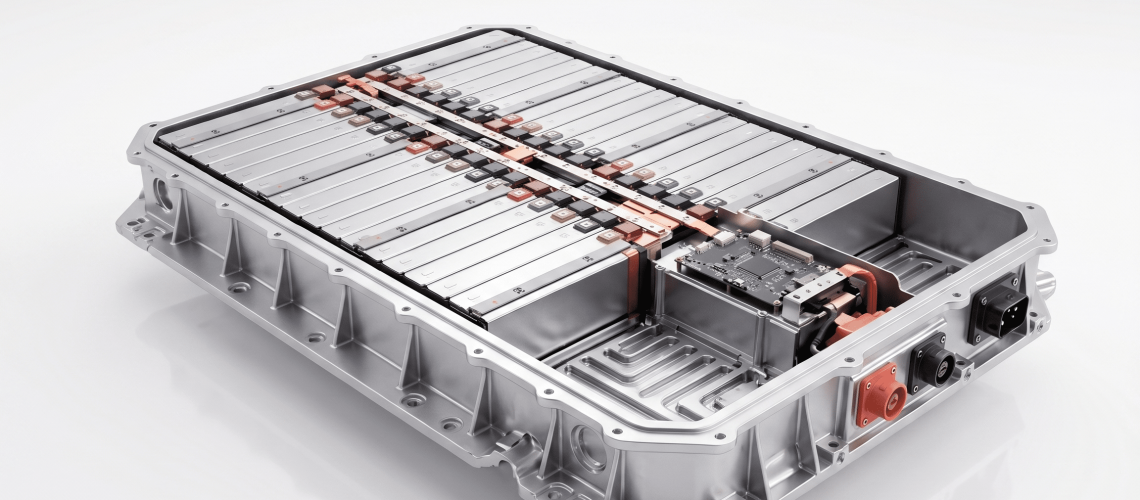
Electric vehicles are driving an unprecedented demand for high-quality aluminum battery housings. But as OEMs push for lighter, larger, and more complex enclosures, quality defects have become a critical bottleneck. Even a single porosity defect or sealing surface failure can trigger costly recalls and compromise vehicle safety.
Here is what every procurement manager and design engineer needs to know about the most common quality issues in aluminum die-cast battery housings — and how leading foundries prevent them before production begins.
The Market Context: Why Battery Housing Quality Matters More Than Ever
The global aluminum die casting market is experiencing rapid growth, valued at approximately $64.87 billion in 2025 and projected to reach $69.77 billion in 2026, growing at a CAGR of 7.5%. The primary driver? Electric vehicle lightweighting. Every kilogram saved in battery housing mass directly translates to extended driving range, making aluminum the material of choice over steel and magnesium alternatives.
But lightweighting creates new engineering challenges. Thinner walls mean higher risk of deformation during machining. Larger housings increase the probability of tolerance stack-up errors. And the shift toward high-pressure die casting (HPDC) for gigacasting-style components introduces porosity risks that traditional quality controls were never designed to catch.
7 Critical Defects in Aluminum Battery Housings
1. Porosity (Gas Entrapment and Shrinkage Voids)
Porosity remains the most pervasive defect in aluminum die casting. It occurs when air, moisture, or mold release agents become trapped in the molten aluminum during injection. Two forms dominate:
- Gas porosity: Air entrapment during turbulent metal flow creates microscopic voids throughout the casting, reducing structural integrity and creating leak paths through sealing surfaces.
- Shrinkage porosity: Uneven cooling in thick sections creates internal cavities that weaken load-bearing areas and reduce thermal conductivity in heat-dissipating components.
Prevention: High vacuum die casting (HVDC) systems evacuate air from the die cavity to below 50 mbar before injection, dramatically reducing gas entrapment. Combined with optimized venting channels in tooling design and controlled filling speeds, HVDC can reduce porosity rates by over 80% compared to conventional die casting.
2. Sealing Surface Failures
Sealing surfaces must maintain extreme flatness and smoothness to prevent coolant or moisture ingress into battery modules. Common failures include:
- Surface flatness deviations exceeding 0.05 mm across large housing planes
- Rough machining marks that damage gasket or O-ring seals during assembly
- Uneven groove width or depth in O-ring seating channels
- Deformation after anodizing or other surface treatments
Prevention: Machine sealing surfaces as the final CNC operation to minimize handling distortion. Use CMM inspection to verify flatness before and after surface finishing. Select anodizing processes that maintain dimensional stability.
3. Deformation During Machining
Thin-wall aluminum structures are inherently susceptible to deformation. Aggressive cutting parameters, incorrect fixturing, and residual stress in raw material can all cause walls to bend, bottom surfaces to warp, or internal ribs to collapse during machining.
Prevention: Optimize CNC tool paths for balanced stress distribution. Reduce cutting forces through appropriate feed rates and depth of cut. Use stress-relieved aluminum blanks and consider temporary support ribs that are removed after final machining operations.
4. Tolerance Stack-Up Across Large Housings
Battery housings often feature large flat areas with dozens of mounting points, coolant channels, and module interface surfaces. When each feature carries a small deviation, the cumulative error leads to assembly misalignment, module rocking, and increased stress on fasteners.
Prevention: Establish a single datum reference plane for all critical machining operations. Maintain temperature-controlled machining environments to prevent thermal expansion errors. Use multi-axis CNC machines to complete complex geometries in a single setup, eliminating reference shifts between operations.
5. Thread Quality Defects in Mounting Points
Threaded holes are critical for module assembly, grounding points, and structural joints. Defective threads cause improper sealing, loose modules, vibration failures, and failed torque testing during end-of-line inspection.
Prevention: Always CNC-machine threads after casting rather than relying on as-cast threads. Use Go/No-Go thread gauges for every production batch. Mask threads before anodizing to prevent coating buildup. Reinforce thread boss areas in the casting design to prevent porosity in threaded zones.
6. Surface Finishing Inconsistencies
Anodizing and other surface treatments introduce their own quality risks: color inconsistency between batches, uneven coating thickness, dimensional changes that affect fitment, and surface scratches from improper handling.
Prevention: Process matching batches together through the same anodizing cycle. Ensure consistent surface preparation across all raw castings before finishing. Verify finishing house capabilities for color control and dimensional tolerance management. Inspect parts both before and after surface treatment.
7. Leak Test Failures
Even when individual quality checks pass, assembled battery housings can fail leak testing due to undetected micro-porosity, sealing surface imperfections, or assembly-induced stress. A single leak failure means the entire housing must be scrapped or reworked, often at significant cost.
Prevention: Implement 100% leak testing as a standard outgoing quality control step. Use helium mass spectrometry or pressure decay testing to detect micro-leaks below the threshold of visual inspection. Perform leak testing after all machining and surface finishing operations are complete, not just after casting.
A Proven Quality Control Framework for EV Battery Housings
Preventing these defects requires a systematic approach that spans the entire manufacturing process — from initial tooling design through final inspection. Here is the framework that separates reliable suppliers from the rest:
- Stage 1 — DFM Review: Perform mold flow analysis and design-for-manufacturability review before any tooling begins. Identify potential porosity zones, thin-wall risks, and sealing surface challenges early.
- Stage 2 — Tooling Design: Incorporate optimized gating, venting, and overflow systems into the mold design. Plan for CNC fixturing points that minimize handling and distortion.
- Stage 3 — Process Control: Maintain tight control over melt temperature, injection speed, and die temperature. Use vacuum-assisted casting for critical structural components.
- Stage 4 — In-Process Inspection: Perform dimensional checks at key stages between casting and final machining. Catch deviations before they compound across operations.
- Stage 5 — Final Validation: Complete CMM dimensional reports, X-ray NDT for internal porosity, material spectroscopy for alloy verification, and leak testing before shipment.
What to Verify When Evaluating a Battery Housing Supplier
When sourcing aluminum battery housings, engineering teams should confirm the following capabilities before committing to production:
- ✅ Performs mold flow analysis and DFM review before tooling
- ✅ Operates an ISO 9001:2015 certified quality management system
- ✅ Provides in-house CNC machining with multi-axis capability
- ✅ Maintains CMM equipment with temperature-controlled metrology laboratory
- ✅ Performs X-ray NDT for internal defect detection on every production batch
- ✅ Conducts optical emission spectroscopy for incoming material verification
- ✅ Includes surface treatment capabilities under controlled conditions
- ✅ Issues comprehensive inspection reports with dimensional, material, and NDT data
- ✅ Demonstrates prior experience with EV battery housing or similar sealed enclosure components
How Renyi Castings Ensures Battery Housing Quality
Since 2005, Renyi Castings has been delivering precision aluminum castings to automotive, aerospace, and industrial markets from our Ningbo facility. With 20 years of foundry experience, a 60-person team, and monthly production capacity exceeding 150,000 castings, we combine traditional foundry expertise with modern quality systems.
Our capabilities are purpose-built for demanding applications like EV battery housings:
- ISO 9001:2015 certified quality management ensures consistent process discipline across every production run
- In-house mold design and manufacturing enables optimized gating, venting, and tooling geometry before first shot
- Integrated CNC machining and surface treatment under one roof eliminates the quality risks of multi-vendor supply chains
- 20°C temperature-controlled metrology lab houses our CMM, visual measurement system (VMS), and 100kN material testing equipment for precision dimensional verification
- Hitachi OES spectrometer verifies every incoming alloy batch meets specification before casting begins
- 8kW X-ray NDT system detects internal porosity and structural defects invisible to surface inspection
Whether you need aluminum die casting, gravity casting, sand casting, or investment casting for your battery housing program, Renyi Castings delivers the engineering support, quality documentation, and production reliability that automotive OEMs demand.
Get in Touch
Need a reliable partner for your next EV battery housing or aluminum casting project? Contact Renyi Castings today to discuss your requirements with our engineering team.