
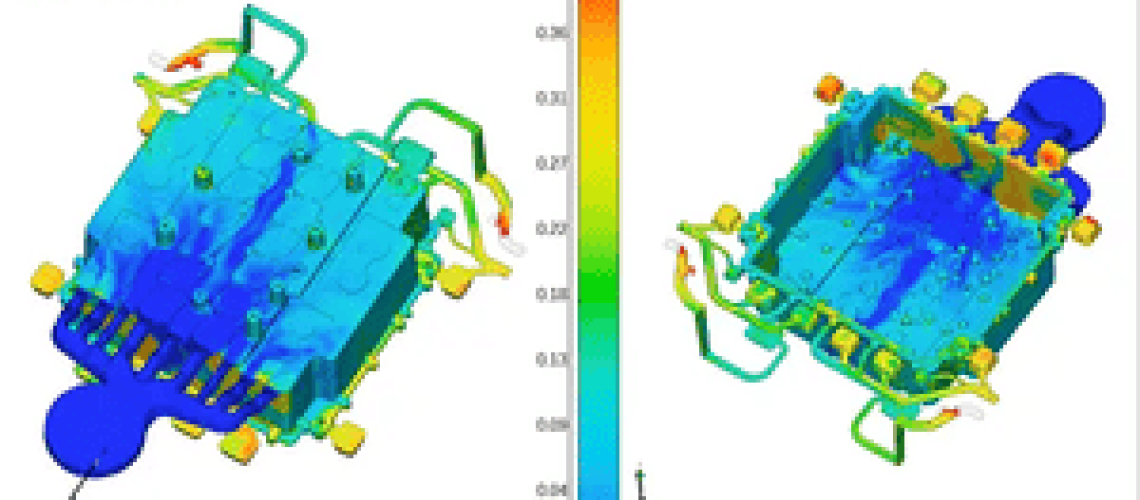
The electric vehicle revolution is rewriting the rules for aluminum casting. With the global aluminum die casting market valued at $84.6 billion in 2025 and projected to reach $134.1 billion by 2033, and the EV-specific aluminum die casting parts segment surging from $18.6 billion to an estimated $45.3 billion by 2034 at an 11.8% CAGR, the pressure on foundries has never been higher. But as volumes scale and geometries grow more complex, one persistent enemy stands between manufacturers and zero-defect production: porosity.
For OEM procurement teams and design engineers sourcing battery housings, motor casings, and structural EV components, understanding porosity—its root causes, detection methods, and prevention strategies—is no longer optional. It is a prerequisite for supplier qualification.
Why Porosity Is the Defining Challenge for EV Castings
Porosity refers to voids, bubbles, or micro-cavities trapped within a casting during solidification. In traditional ICE applications, small pores in non-critical areas were often tolerable. EV components operate under different rules entirely.
- Battery housings require IP67 sealing integrity—even microscopic porosity can create leak paths that compromise ingress protection
- Motor casings endure continuous thermal cycling where pores act as stress concentrators, accelerating fatigue failure
- Structural components produced via giga-casting must meet crash-safety energy absorption requirements, where internal voids directly reduce crush performance
A single EV battery housing project on a 3,000-ton press recently saw X-ray rejection rates of 6% due to microporosity compromising sealing integrity. At volume, that translates to tens of thousands of dollars in scrap per month—and potential supply chain disruptions that OEMs cannot afford.
The Two Faces of Porosity: Gas vs. Shrinkage
Not all porosity is created equal. Understanding the distinction is critical for root-cause analysis and corrective action.
Gas Porosity
- Appears as smooth, spherical bubbles within the casting
- Caused by trapped air in the mold cavity, steam from die lubricants, or dissolved hydrogen in the molten aluminum
- Exacerbated by high injection speeds and turbulent mold filling—hallmarks of conventional high-pressure die casting (HPDC)
Shrinkage Porosity
- Manifests as jagged, sponge-like voids typically in thick sections or hot spots
- Occurs when molten metal solidifies and contracts without adequate feed metal reaching the area
- Commonly found in bosses, ribs, and areas far from the gate—locations that are difficult to predict without simulation
In practice, many EV castings suffer from both types simultaneously, making a systematic approach to prevention essential.
Detection Technologies: From Visual Inspection to CT Scanning
The automotive industry references several standards for porosity evaluation, including ASTM E505 (Reference Radiographs for Aluminum Castings) and OEM-specific pore-size limits that define maximum allowable void dimensions by critical zone. Modern foundries deploy a layered inspection strategy:
- Visual inspection—identifies surface-breaking porosity but misses internal defects entirely
- X-ray radiography—non-destructive internal imaging; high-powered systems (8kW and above) can penetrate thick-section aluminum castings and reveal pore size, distribution, and location
- Coordinate Measuring Machines (CMM)—verify dimensional accuracy and correlate surface features with potential internal defects
- Pressure decay / leak testing—mandatory for sealed housings; pressurizes the component and monitors for pressure loss to detect through-wall porosity
- Optical Emission Spectrometry (OES)—validates alloy chemistry in real time, catching hydrogen-prone compositions before they enter the die
Leading foundries are now integrating machine learning algorithms with X-ray data to automate porosity classification, reducing human variability in acceptance decisions and enabling real-time process adjustments on the production floor.
Prevention Strategies That Actually Work
The most effective foundries treat porosity prevention as a system-level challenge, not a single-parameter fix.
1. Vacuum-Assisted Die Casting
Vacuum systems (both Static Squeeze Vacuum and Dynamic Cavity Vacuum) evacuate air from the mold cavity before injection, directly targeting the root cause of gas porosity. Industry case studies show vacuum-assisted HPDC reducing porosity from 6% rejection rates to below 0.3%—measured via CT scan—while eliminating the need for secondary impregnation processes that add $2.50+ per part.
2. Mold Flow Simulation and DFM
Advanced casting simulation software predicts fill patterns, thermal gradients, and solidification sequences before tooling is cut. This allows engineers to redesign gating systems, reposition overflows, and optimize wall thickness transitions to minimize shrinkage-prone hot spots. Design for Manufacturability (DFM) reviews at the quoting stage prevent costly redesign cycles downstream.
3. Process Parameter Control
- Injection speed profiling—controlled acceleration curves reduce turbulence during cavity fill
- Die temperature management—consistent thermal balance prevents cold shuts and premature solidification
- Melt quality management—degassing, fluxing, and real-time hydrogen measurement ensure clean metal enters the shot sleeve
4. Strategic Venting Design
Properly engineered venting—combining overflow wells, squeeze pins, and vacuum channels—provides escape routes for trapped gases. Redesigned venting topology on EV battery housing programs has been shown to cut scrap rates from 6% to under 1%, with fatigue life improvements of 25% in AlSi10Mg alloy components.
Selecting a Casting Partner: The Quality Infrastructure Checklist
When evaluating aluminum die casting suppliers for EV and automotive programs, the following quality infrastructure should be non-negotiable:
- ✅ ISO 9001:2015 certified quality management system with current audit records
- ✅ In-house X-ray NDT capability (minimum 8kW for thick-section aluminum)
- ✅ Coordinate Measuring Machine (CMM) and Vision Measuring System (VMS) for dimensional verification
- ✅ Optical Emission Spectrometer for real-time alloy chemistry control
- ✅ Temperature-controlled metrology lab (20°C ±1°C) for measurement consistency
- ✅ 100% leak testing capability for sealed housing applications
- ✅ Mold flow simulation and DFM review before tooling commitment
- ✅ Full material traceability from certified ingot to shipped part
- ✅ In-house CNC machining and surface treatment to eliminate handoff quality gaps
How Renyi Castings Delivers Porosity-Free EV Components
At Renyi Castings, porosity prevention is engineered into every stage of our process. With 20 years of foundry expertise and ISO 9001:2015 certification, our 60-person team produces over 150,000 aluminum castings per month across six core processes: high-pressure die casting, gravity casting, sand casting, investment casting, precision forging, and large heavy-duty components.
Our quality infrastructure includes:
- A 20°C controlled metrology laboratory equipped with a Hitachi OES spectrometer, 8kW X-ray NDT system, CMM, VMS, and 100kN universal material tester
- In-house mold design and manufacturing—ensuring gating and venting are optimized before first shot
- Integrated CNC machining and surface treatment under one roof, eliminating inter-supplier quality gaps
- Full FAIR, CMM and material certification documentation for automotive program launches
Whether you need prototype validation for a new EV battery housing design or high-volume production of motor end brackets, our vertically integrated operation gives you a single point of accountability from alloy selection through final inspection.
Looking Ahead: The Cost of Getting It Wrong
As EV platforms move toward larger structural castings—with giga-casting operations running on 6,000-ton and 9,000-ton presses—the cost of porosity failures scales exponentially. A single scrapped mega-casting can represent thousands of dollars in lost material and machine time. More critically, undetected porosity in field-deployed vehicles creates warranty liability and safety risk that no OEM can absorb.
The foundries that will win in 2026 and beyond are those investing in prevention-first quality systems, real-time process monitoring, and the inspection infrastructure to back up their claims with data. The technology exists. The standards are tightening. The only question is whether your casting partner is ready.
Ready to discuss your next EV casting program? Contact our engineering team for a DFM review and capability assessment.